
Independently Built AI Application

The Challenge

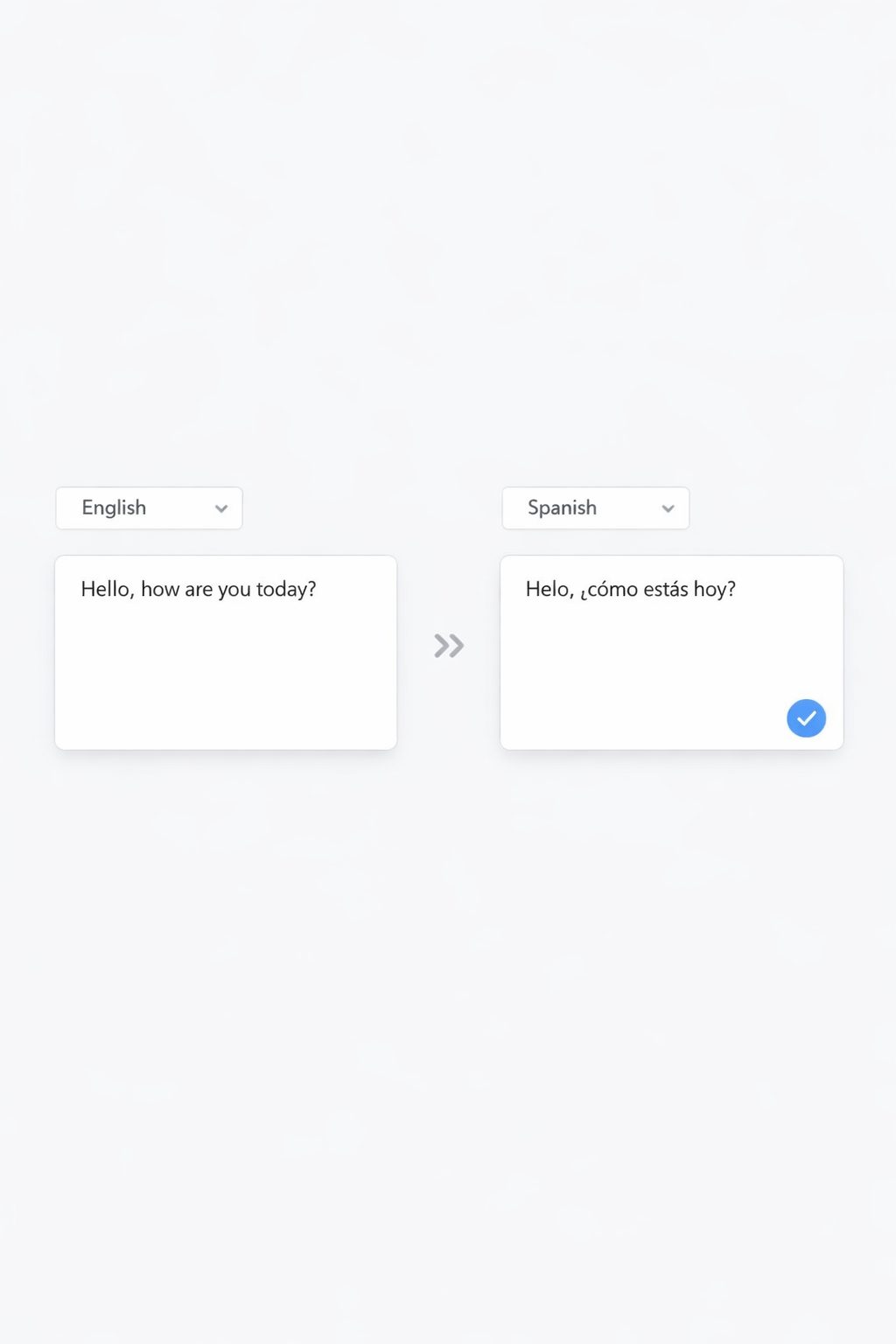
Language learning tools are often bloated, locked behind paywalls, or require full accounts just to experiment. I wanted something fast, minimal, and frictionless — a tool where anyone can drop in text and instantly translate it using a clean UI and modern AI translation.

OUR SOLUTIONS

A Full-Stack Translation Experience, Built from Scratch

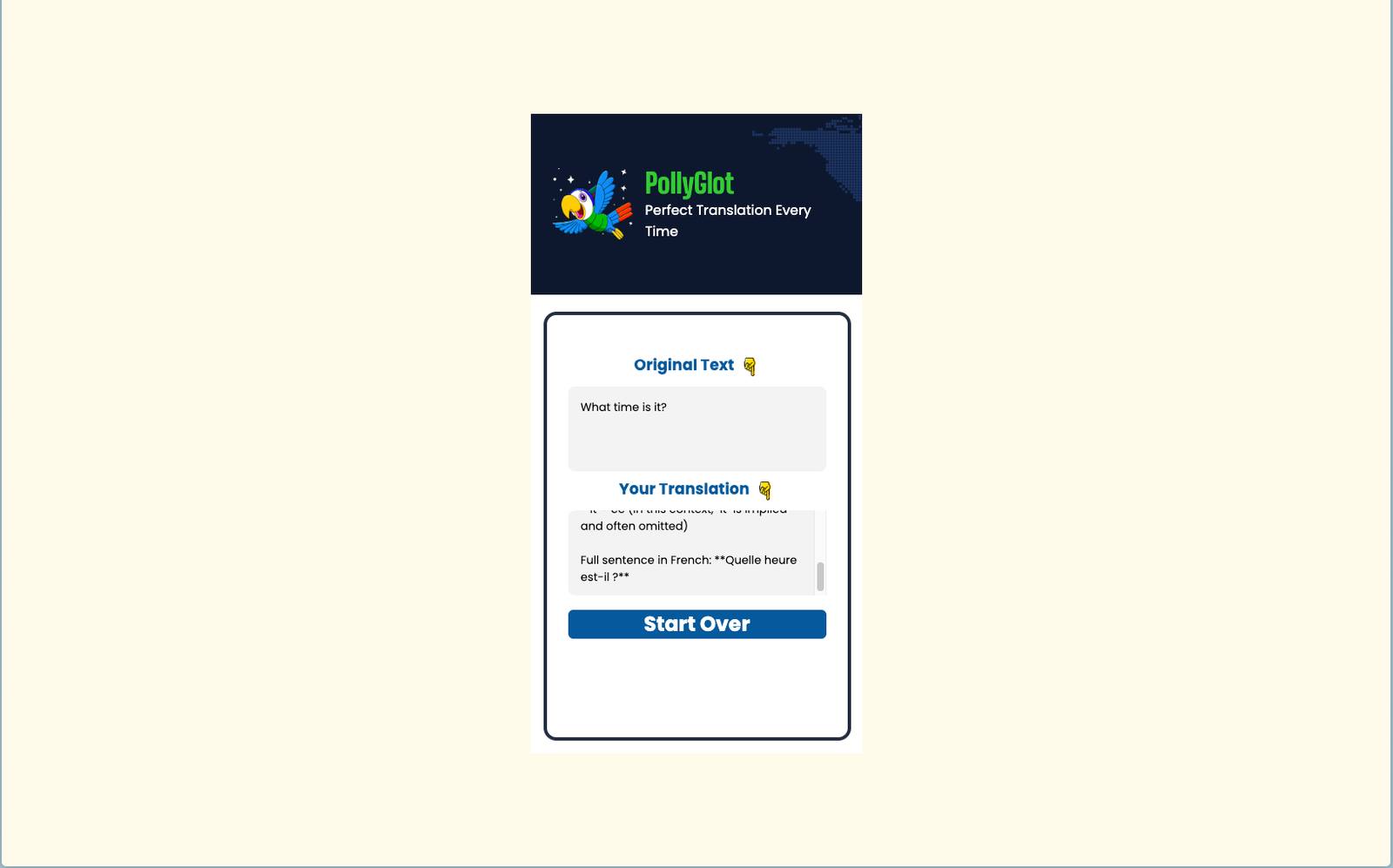
PollyGlot processes language translation server-side using Vercel Functions and the OpenAI API, wrapped in a minimal front-end that emphasizes clarity, accessibility, and zero-friction user flow.

Real-World Outcomes

A Production-Ready AI App, Deployed Live

PollyGlot demonstrates that AI-powered systems benefit most from strong fundamentals — predictable state flow, clear separation of concerns, and observability.

Engineering Fundamentals

Why Building Without Frameworks Mattered

Modern AI tools evolve faster than frameworks can keep up. Building PollyGlot without React or UI libraries forced a deeper understanding of browser APIs, async flows, and system design. That foundational knowledge transfers to any stack — and unlocks longevity in an ecosystem changing at AI speed.

Understanding the Full Request Lifecycle

Seeing the translation pipeline end-to-end — from textarea input → validation → HTTP request → serverless processing → OpenAI → returning JSON → UI rendering — built confidence in debugging, architecture, and separation of concerns.

Ensuring Reliability Across the Stack

Full-stack debugging ensured predictable behavior across UI, API, and serverless execution — reflecting production-grade engineering standards.

Deploying With Intention

Deployment included runtime tuning, environment-variable security, and cold-start mitigation — reflecting production-grade operational requirements.

Project Timeline

Bringing PollyGlot to Life

PollyGlot was built as a full-stack AI product — not just a demo. What began as a guided project quickly evolved into a production-style application with clear architecture, secure serverless execution, and deployment discipline. Below is how the app took shape, step-by-step.

Discovery & Architecture

Discovery & Architecture

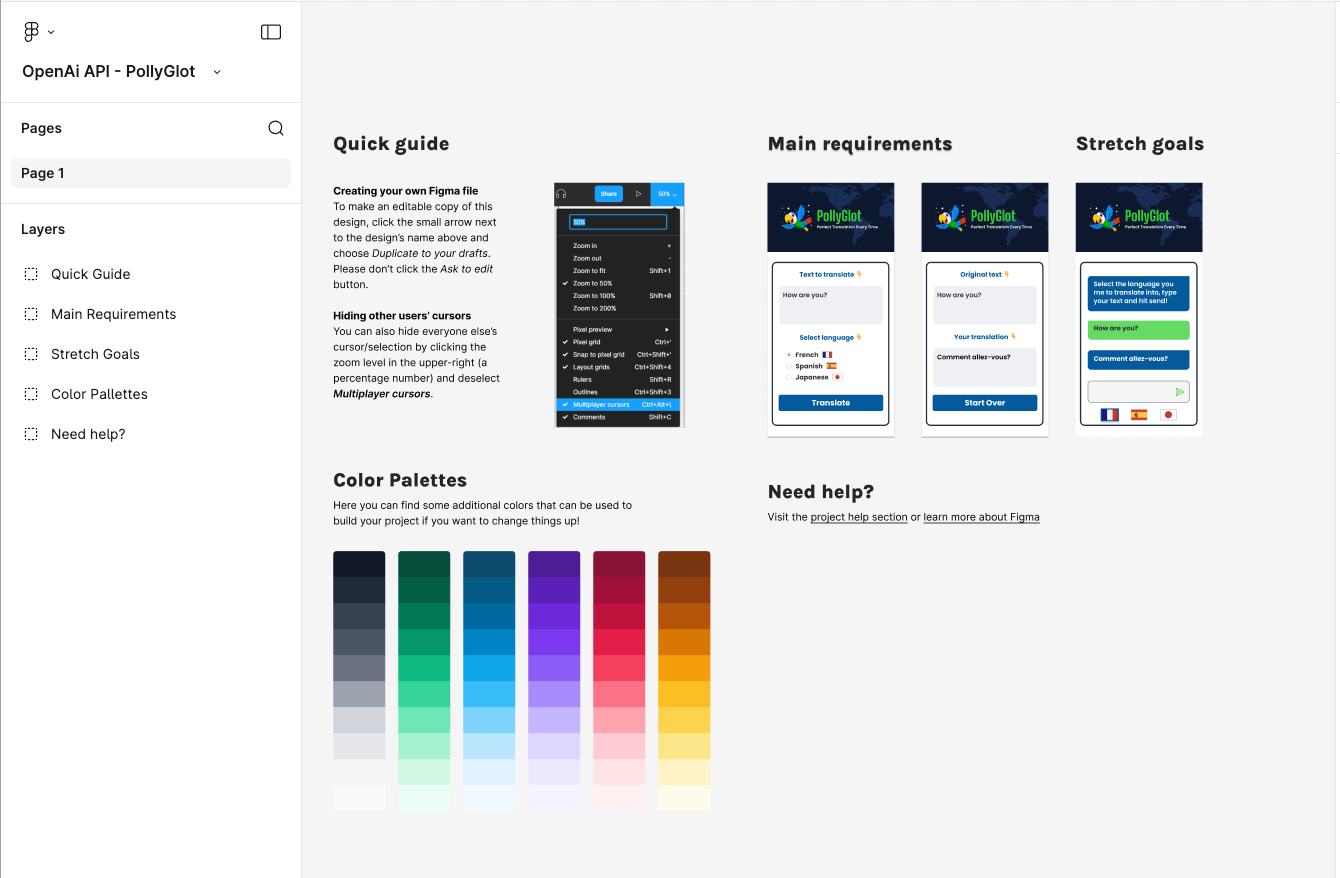
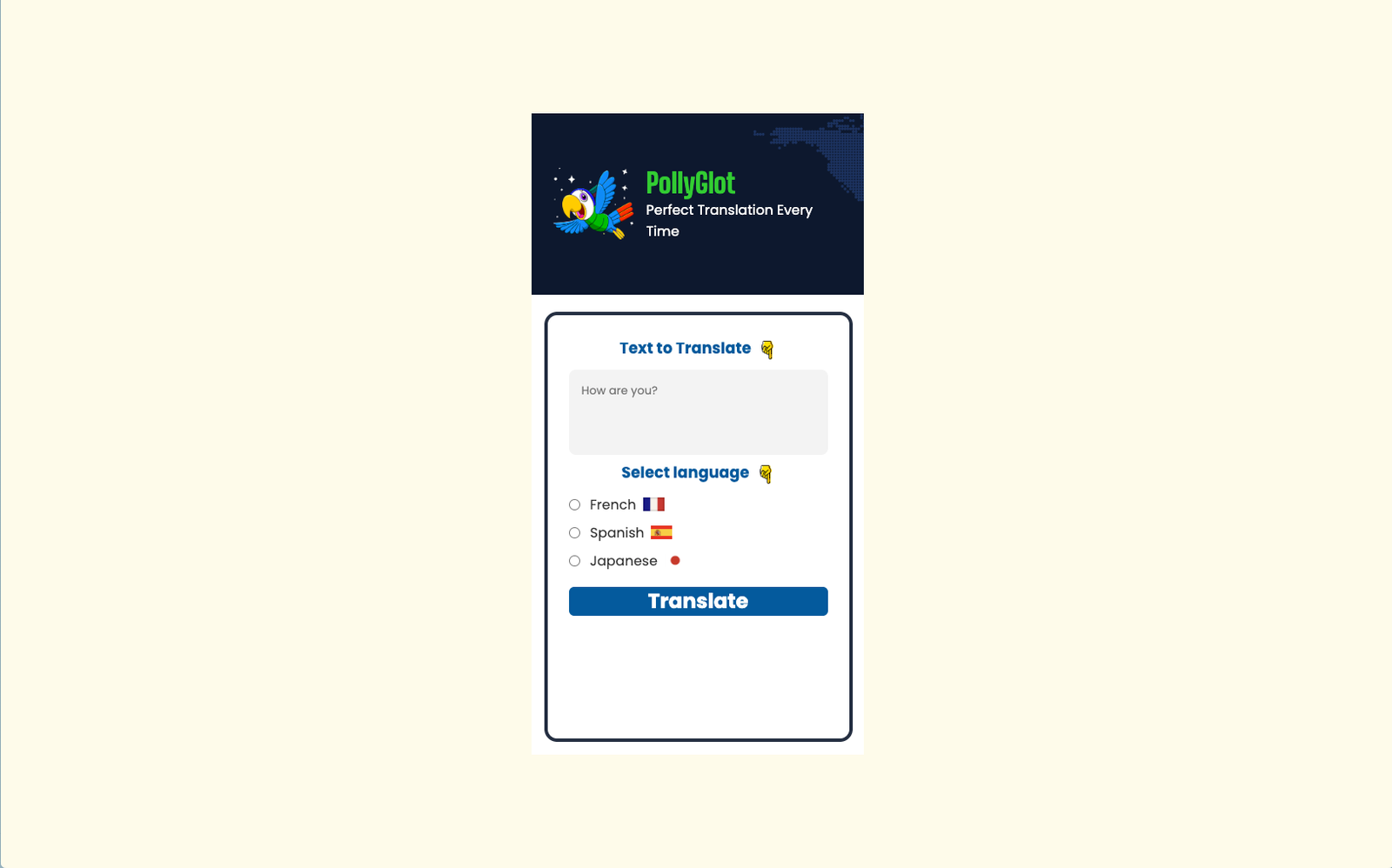
Reviewed the Scrimba AI Engineer Path requirements, Figma design, and example flows to define the scope for PollyGlot. Identified the core user journey (input → language selection → translation → feedback) and mapped a simple architecture using Vite on the front end, Vercel Functions for the API layer, and OpenAI for translation.
Front-End Implementation

Front-End Implementation

Implemented the UI with semantic HTML and vanilla CSS to keep the markup accessible and predictable. Built responsive layout and state-driven styles for idle, loading, error, and success states. Used vanilla JavaScript to wire up form handling, language selection, and DOM updates without any framework abstractions.
Serverless API & OpenAI Integration

Serverless API & OpenAI Integration

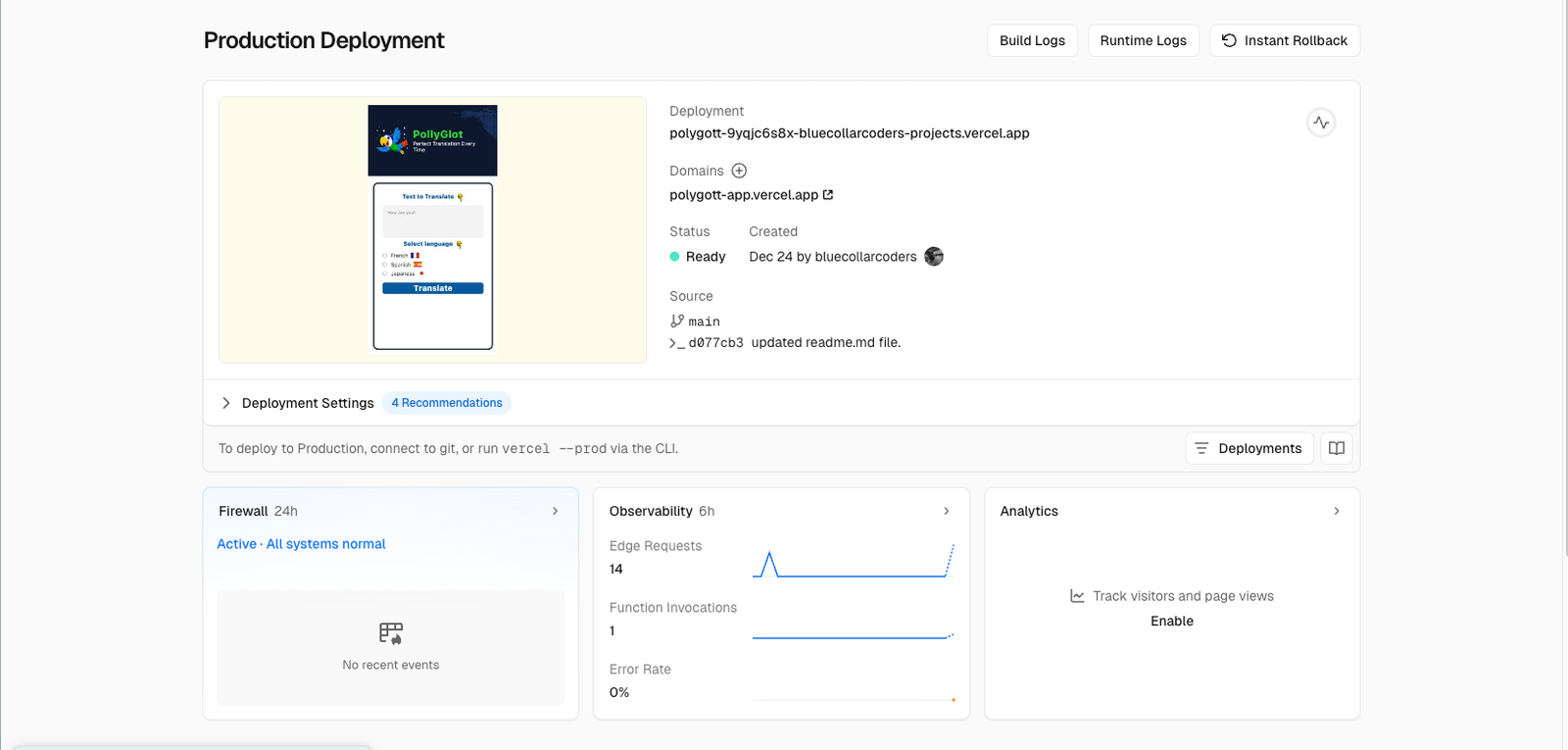
Created a Vercel serverless function in Node.js to handle translation requests. The function validates input, forwards prompts to the OpenAI API, and returns structured JSON back to the client. Environment variables keep API keys secure across local and production environments, with basic rate limiting to protect quotas.
Debugging, Hardening & Deployment

Debugging, Hardening & Deployment

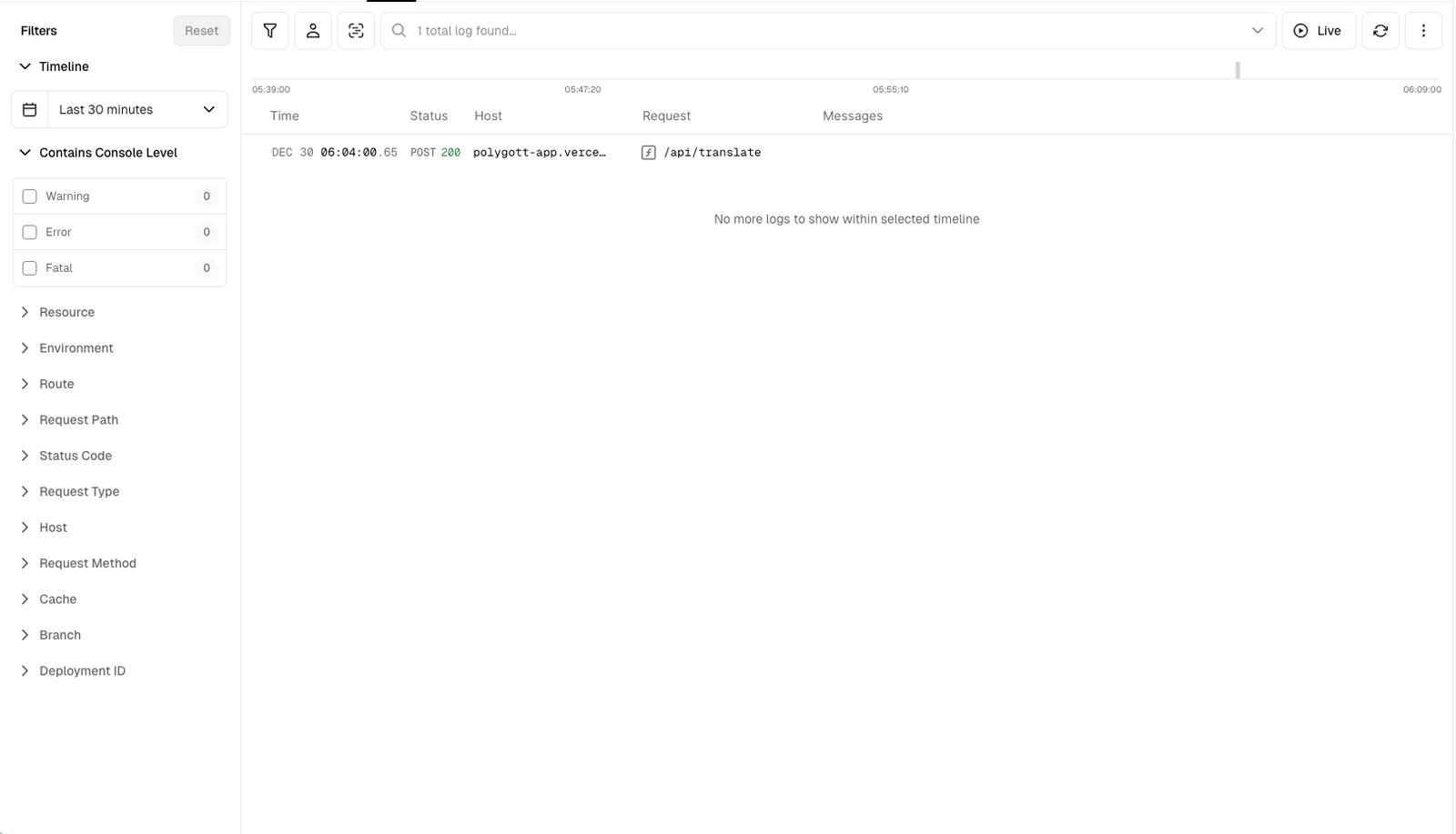
Debugged 404 routing issues, 500 errors from misconfigured environment variables, and edge cases in input handling. Added clearer error messaging and guardrails around API usage. Deployed to Vercel and validated that the full stack — UI, serverless functions, and OpenAI integration — behaves reliably in a real-world environment.

A Personal Reflection

This Was the Moment It All “Clicked.”

PollyGlot is intentionally concise, but it reflects full-cycle ownership — architecture, implementation, deployment, and refinement.

Caleb Matteis

Software Engineer & AI Builder